What Happens to Your Attention When You Step Outside?
Soft fascination may help explain why watching water, clouds, leaves, or birds can leave the mind feeling clearer. Explore the research and try a gentle attention-restoration practice.
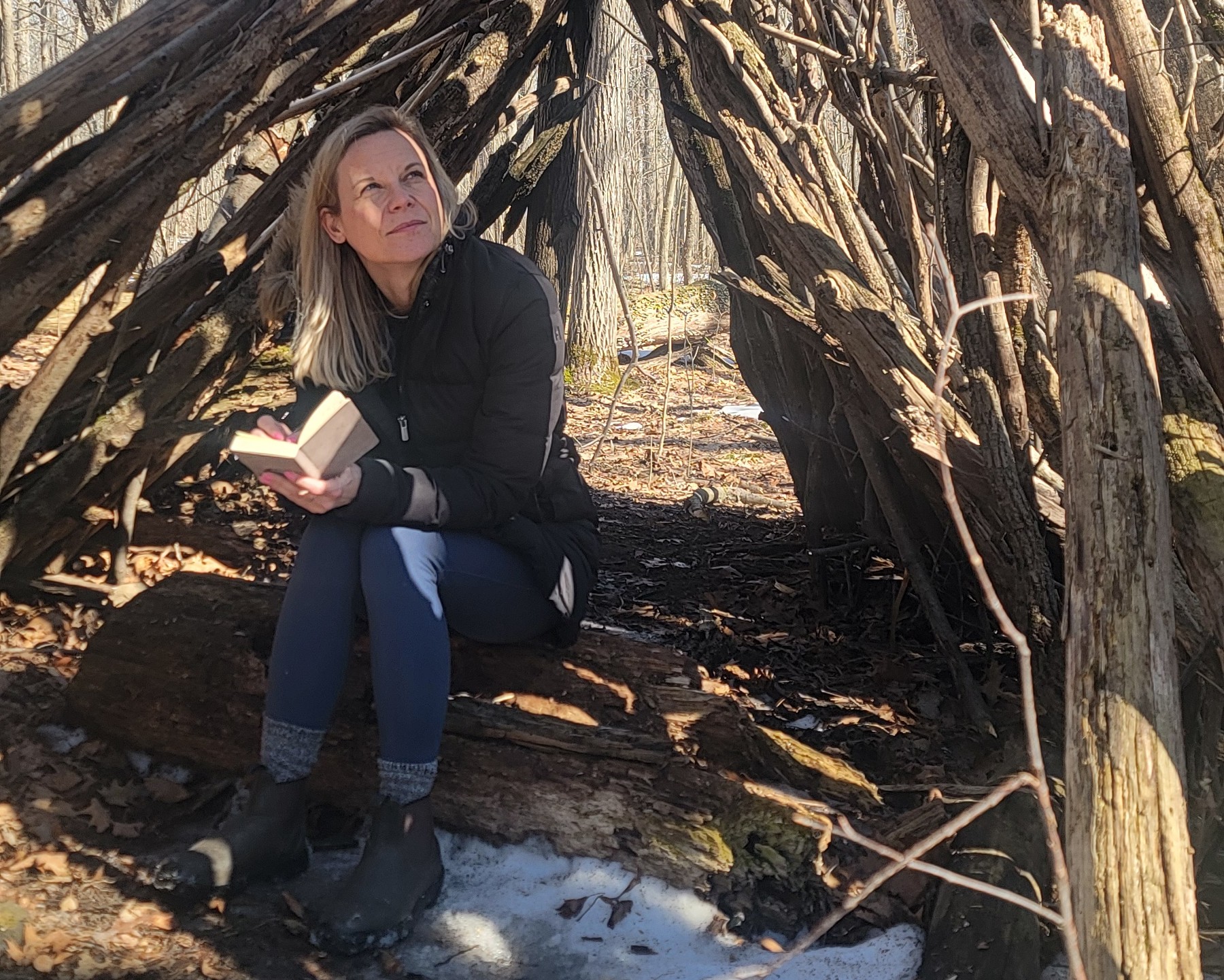
Have you ever stepped outside with a crowded mind and returned feeling slightly clearer, even though nothing in your life had changed?
Perhaps you watched water moving over stones. Followed a bird between branches. Noticed clouds gathering and separating. For a few moments, your attention was occupied, but it was not being pushed.
Environmental psychologists use the term soft fascination to describe this gentle form of attention. It is one possible explanation for why contact with nature can sometimes feel mentally restorative.
The idea is compelling, but it deserves more than an easy promise that nature “resets the brain.” The research is more nuanced. Natural environments may support certain aspects of attention, but the effects vary, and researchers are still working to understand exactly why they occur.
Why attention becomes tired
Much of daily life depends on deliberate attention.
You use it when you concentrate on a conversation, ignore notifications, make decisions, complete paperwork, move between tasks, or try to work while part of your mind is occupied by something else.
This kind of focus requires effort. You must continually decide what matters and filter out what does not.
After long periods of concentration, you may notice familiar signs of mental fatigue. You reread the same sentence. Small decisions feel strangely difficult. Your patience shortens. You reach for your phone without consciously deciding to do so.
This does not necessarily mean that attention is a battery that has literally run empty. Attention is more complex than that. But sustained mental effort can affect how well we concentrate, resist distraction, and move flexibly between ideas.
A change in environment may give those heavily used processes a different kind of demand.
What is soft fascination?
Attention Restoration Theory was developed by psychologists Rachel and Stephen Kaplan. The theory proposes that some environments allow effortful attention to rest by engaging a more spontaneous form of interest.
The Kaplans described four qualities associated with a restorative environment:
- Being away: experiencing some distance from ordinary demands
- Extent: feeling that the environment has enough depth or coherence to enter mentally
- Compatibility: feeling that the setting fits your needs and intentions
- Fascination: having your attention captured without having to force it
Soft fascination is the gentlest form of that final quality.
It might occur while watching grasses move in the wind, light shift across a wall, snow fall, waves arrive at the shore, or an insect travel across a leaf. The experience is interesting enough to hold your attention, but not so demanding that it consumes it completely.
Your mind is engaged without being instructed to perform.
What does the research show?
Several studies have found that people perform better on some attention or working-memory tasks after exposure to natural settings than after exposure to more urban settings.
In a widely cited 2008 experiment, researchers found improvements on a working-memory task after participants walked through a natural environment compared with a walk through a busy urban area. A later analysis pooling multiple controlled experiments also found better performance after nature exposure on a task requiring working memory and attentional control.
Systematic reviews offer a more careful picture. A 2018 review found low-to-moderate improvements in working memory and cognitive flexibility after exposure to natural environments. Evidence for improvements in attentional control was less reliable.
A 2025 systematic review and meta-analysis similarly concluded that nature exposure was more restorative on average than non-nature exposure. However, the overall effects were small and varied considerably across studies. The review suggested that exposure duration mattered, with benefits appearing largest at around 30 minutes on average.
That does not make 30 minutes a magic number. It tells us what appeared in a collection of studies, not what every person must do.
The responsible conclusion is not that nature reliably restores everyone’s attention. It is that natural environments appear capable of supporting certain aspects of cognitive functioning, while the strength and mechanism of that effect remain active areas of research.
Soft fascination is probably not the whole explanation
Attention Restoration Theory is influential, but it is still a theory.
Natural environments may affect us through several overlapping pathways. They may reduce exposure to traffic, advertising, noise, and other stimuli that require monitoring. They may encourage movement, change our emotional state, interrupt rumination, or give us a meaningful sense of distance from ordinary responsibilities.
Personal history also matters. A forest may feel peaceful to one person and unsafe to another. A quiet shoreline may be restorative for someone who loves water but uncomfortable for someone carrying a difficult memory.
Nature does not act upon every nervous system in the same way.
Soft fascination gives us useful language for one part of the experience. It should not be treated as the only explanation.
Why scrolling may not provide the same rest
When we feel mentally tired, many of us instinctively reach for a screen.
This makes sense. Our phones offer quick novelty, relief from difficult thoughts, and an immediate change of focus. Sometimes they genuinely connect, entertain, or guide us.
The difference is not simply “screens are bad and nature is good.” What matters is the kind of attention an experience asks us to use.
Rapidly changing content may continue to ask the mind to evaluate, choose, dismiss, compare, and anticipate. Each piece of content is brief, but the stream rarely ends. What feels like a break can still involve hundreds of small attentional decisions.
Soft fascination has a different quality. There is no next post to choose and no message requiring an answer. Attention can move without constantly being redirected by someone else’s design.
You do not need a wilderness experience
Restorative contact with nature does not have to involve a remote forest, expensive retreat, or free afternoon.
You might find gentle fascination in:
- Rain moving down a window
- A tree outside your workplace
- Shadows shifting across the ground
- Birds gathering on a wire
- Clouds changing shape
- A houseplant producing a new leaf
- Water moving through a fountain
- Wind passing through tall grass
Research has included real environments, images, video, and simulated nature. These experiences may not be equivalent, and real settings often include more sensory richness, but meaningful contact can begin wherever nature is available to you.
The important question may be less “How far did I go?” and more “What kind of attention did this moment invite?”
Try a five-minute soft-fascination pause
This is an invitation, not a scientifically established dose or another task to perfect.
Find a place where you feel reasonably comfortable. Outside is ideal, but a window or indoor natural element can work.
Choose something that moves or changes gently. It might be leaves, clouds, water, flame, shadow, or birds.
Let your gaze rest rather than stare. You do not need to catalogue what you see or force yourself to concentrate.
Notice where your attention travels naturally. If your mind returns to a problem, allow that. When you are ready, let the movement in front of you invite your attention back.
Remain for five minutes if that feels available. Stay longer if you want to.
When you finish, do not ask whether you performed the practice correctly. Simply notice:
- Does my mind feel any different?
- Does focusing feel easier, harder, or unchanged?
- What held my attention without effort?
- What did I notice when nothing required a response?
Some days you may feel clearer. Other days you may feel restless, sad, distracted, or unaffected. All of those responses are information.
A gentler way to return
We live in an environment that repeatedly asks us to focus harder, process faster, and respond sooner.
Nature offers a different relationship with attention.
A bird does not require you to understand it. Moving water does not ask for a decision. Clouds do not measure whether you have been productive enough to deserve a pause.
They give the mind something to meet without demanding that it perform.
Perhaps this is part of what we experience when we step outside with a crowded mind and return with a little more room inside it.
Not a cure. Not an escape from what matters.
Just a quieter form of attention and an invitation to begin again.
Research referenced
Kaplan, S. (1995). The restorative benefits of nature: Toward an integrative framework. Journal of Environmental Psychology, 15(3), 169–182.
Berman, M. G., Jonides, J., & Kaplan, S. (2008). The cognitive benefits of interacting with nature. Psychological Science, 19(12), 1207–1212.
Stevenson, M. P., Schilhab, T., & Bentsen, P. (2018). Attention Restoration Theory II: A systematic review to clarify attention processes affected by exposure to natural environments. Journal of Toxicology and Environmental Health, Part B, 21(4), 227–268.
Stenfors, C. U. D., et al. (2019). Positive effects of nature on cognitive performance across multiple experiments. Frontiers in Psychology, 10, 1413.
Bell, C. N., et al. (2025). The relationship between nature exposures and attention restoration, as moderated by exposure duration. Journal of Environmental Psychology, 104, 102632.